How to Interpret Your Natal Chart
· yourhoroscopereading.com
Have you ever wondered why you are the way you are? Your unique personality, your hidden talents, and even your biggest challenges are written in the stars from the moment you were born. A natal chart interpretation is the key to reading that celestial story. It is your personal map of the sky at your exact time and place of birth, and it holds profound insights into your life's journey.
Think of it as your soul's fingerprint. While your Sun sign (like Leo or Taurus) gives a broad stroke, a full birth chart reading paints the entire, detailed picture. This guide will walk you through understanding this powerful tool. We will break down the planets, the signs, and the astrology houses explained in simple, friendly language. By the end, you will see yourself in a whole new light.
What Is a Natal Chart, Really?
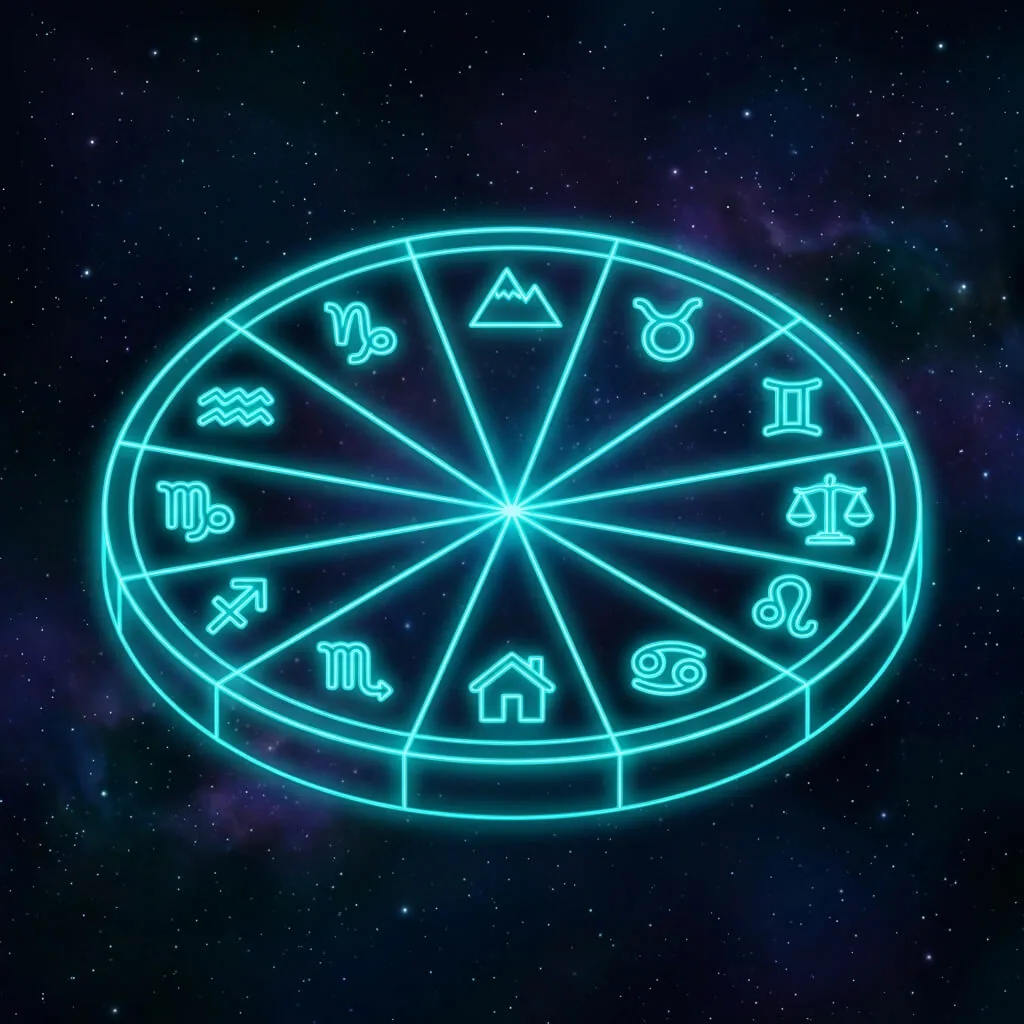
A natal chart is a snapshot of the sky at the precise moment you took your first breath. It captures the positions of the Sun, Moon, and planets against the backdrop of the zodiac signs and the twelve segments of space around Earth, known as houses. This snapshot is frozen in time, just for you. It becomes a symbolic map that astrologers use to interpret your innate character, your emotional needs, your thinking style, and the themes of your life.
You need three key pieces of information to calculate your chart: your date of birth, your exact time of birth, and your place of birth. The time is especially crucial because it determines the rising sign, or Ascendant. This is the zodiac sign that was rising on the eastern horizon when you were born. It sets up the entire structure of the chart's houses. Without an accurate birth time, a natal chart interpretation is like a book missing its first chapter. The planets are still there, but the context of where their energy plays out in your life is fuzzy.
Here is what most people get wrong. They think their Sun sign is the only thing that matters. In reality, your Sun sign is just one important character in a much larger cast. Your Moon sign represents your inner emotional world. Your Mercury sign shows how you communicate. Each planet plays a specific role. A true birth chart reading looks at how all these characters interact with each other. Are they supporting each other? Are they in tension? This dynamic conversation is what makes you uniquely you.
The Core Components: Planets, Signs, and Houses
Every natal chart interpretation rests on three pillars: the planets (the actors), the zodiac signs (the costumes or styles they wear), and the houses (the stages or areas of life where they perform). Let us break them down one by one with a real example. Meet Maya. She was born on August 15, 1990, at 4:30 PM in Chicago. Her Sun is in Leo. This gives her a bright, confident, and creative core personality. But that is only the beginning.
Her Moon is in sensitive Cancer. This means that while she projects Leo confidence, internally she is deeply nurturing and needs emotional security. Her Mercury, the planet of communication, is also in Leo. So she thinks and speaks in a bold, dramatic way. Now, where do these planets act? That is determined by the houses. Let us say Maya's Leo Sun is in her 10th house of career and public reputation. This suggests her natural leadership and desire for recognition will shine most brightly in her professional life. Her Cancer Moon in her 9th house of travel and philosophy means she finds emotional comfort through learning, exploring other cultures, or seeking higher meaning.
Think about it this way. A planet is *what* is happening (action). The sign it is in is *how* it happens (style). The house it is in is *where* it happens (area of life). Venus in Aries in the 7th house? That is the *what* (love, values), the *how* (direct, impulsive, passionate), and the *where* (in one-on-one relationships and partnerships). Understanding these planetary positions at birth is the first step to making sense of your chart. You start to see not just traits, but a story of where your energy is focused.
How to Read Your Own Birth Chart Step by Step
Starting your own birth chart reading can feel overwhelming. There are so many symbols and lines. Do not worry. The best approach is to learn one piece at a time. First, get your chart calculated. You can use many free websites by entering your birth details. Print it out or have it open on your screen. Now, ignore the confusing lines (the aspects) for now. Just look at the circle divided into twelve slices. Those are the houses.
Step one: Find your Rising Sign (Ascendant). This is the sign on the cusp, or starting line, of your 1st house. It is usually marked "AC" or "Asc." This sign describes the mask you wear for the world, your first impressions, and your physical energy. Step two: Find your Sun and Moon. Note their signs and which house number they are inside. Your Sun is your core self. Your Moon is your heart. Already, you have three vital clues about yourself.
Step three: Look at the ruler of your chart. This is the planet that rules your Rising Sign. For example, if you are a Taurus Rising, your chart ruler is Venus. Find where Venus is placed in your chart by sign and house. This planet's placement is incredibly important. It shows where you can channel your life force most effectively. Step four: Just observe. Notice if planets are clustered in one area of the chart. That house theme will be a major focus in your life. This is where it gets interesting. You might be skeptical, and that is completely fine. Just try it as a curious exercise in self-reflection. You will likely find surprising correlations.
The Importance of Planetary Positions at Birth
The specific locations of the planets in your chart are not random. They set the tone for your entire life. Astrologers call this the "planetary positions at birth." These positions create a unique energy pattern that is yours alone. Even twins born minutes apart will have slightly different charts because the planets are constantly moving. The angles between the planets, called aspects, are also determined by these fixed positions. They describe how the different parts of your personality get along.
For instance, if your Mars (action, drive) is in a harmonious aspect to your Jupiter (expansion, luck), you might find that when you take initiative, opportunities seem to open up for you naturally. Conversely, if your Saturn (discipline, restriction) is in a challenging aspect to your Moon (emotions), you might have learned to suppress your feelings or had to grow up emotionally very quickly. [This is where looking at your own history can be revealing.] These planetary relationships explain why two people with the same Sun sign can be so different.
The slower moving planets, like Jupiter, Saturn, Uranus, Neptune, and Pluto, define the generation you belong to. Their positions are similar for everyone born around the same time. But their placement by *house* in your personal chart shows where these big generational themes will play out for *you*. For Carlos, born in 1988, Uranus and Neptune were in Capricorn. This generation is reshaping structures (Capricorn) with innovation (Uranus) and idealism (Neptune). If those planets are in Carlos's 2nd house of money and values, his personal journey involves revolutionizing how he earns, values, and builds security.
How Natal Chart Interpretation Affects Your Daily Life
You might think astrology is only for big life predictions. In truth, a natal chart interpretation is incredibly practical for daily understanding. It helps you work *with* your natural energy, not against it. Knowing your chart is like having a personal user manual. For example, if you know your Moon is in Aries, you understand that you process emotions quickly and need physical activity to relieve stress. On a tough day, instead of ruminating, you would know to go for a run.
Let us take Priya. Her Mercury is in meticulous Virgo in her 6th house of daily work and health. She thrives on routine, detailed lists, and practical problem-solving at her job. Trying to force herself into a chaotic, big-picture-only role would drain her. Her chart shows her that her strength lies in organization and service. For James, with Venus in adventurous Sagittarius in his 9th house, he finds joy and connection through travel, learning, and meeting people from different backgrounds. His ideal date might be a philosophy lecture or a hiking trip in a new country, not a standard dinner and a movie.
This awareness helps with relationships, too. If you know your partner's Mars is in diplomatic Libra, you understand they avoid direct conflict and need harmony to feel motivated to act. You can approach disagreements more gently. Your chart does not dictate your fate. It reveals your innate tools and tendencies. A daily birth chart reading is not about what *will* happen, but about how you can best navigate whatever happens using your cosmic toolkit.
Common Misconceptions About Natal Chart Interpretation
There are many myths about astrology that can confuse people. Let us clear up the biggest ones. The first major misconception is that your Sun sign horoscope in a magazine is your full story. As we have discussed, your Sun is just one piece. Those horoscopes are written for the one-twelfth of the population sharing your Sun sign. They cannot account for your unique Moon, Rising, or planetary placements. They are entertainment, not a personal guide.
Another common fear is that a natal chart spells out a fixed, unchangeable destiny. This is absolutely false. Astrology is about potential and probability, not predetermination. Think of your chart as the weather forecast for your life. If the forecast shows rain (a challenging aspect), you are not forced to get wet. You can choose to carry an umbrella (develop awareness), stay inside (avoid the situation), or dance in the rain (use the energy creatively). Your free will is always the most powerful force.
People also often believe that only "bad" or difficult aspects matter. In reality, the easy, harmonious aspects show your natural talents and flow. The challenging aspects show where you will grow, develop strength, and often find your greatest purpose. A chart with only easy aspects might sound nice, but it could describe a person who never develops depth or resilience. The tension in a chart is where the magic of growth happens. A skilled natal chart interpretation highlights both your gifts and your growth edges.
Related Articles
Frequently Asked Questions
Final Thoughts
Embarking on the journey of natal chart interpretation is a profound act of self-discovery. It moves you beyond simple Sun sign labels and into a rich, nuanced understanding of your soul's design. By learning about your planetary positions at birth and how the astrology houses explained the stages of your life, you gain a powerful language for your experiences. This knowledge is not about limiting yourself with labels. It is about empowering yourself with awareness. You can honor your natural rhythms, understand your reactions, and play to your unique strengths. Remember, the stars do not compel; they merely describe. The choices, the growth, and the love you cultivate are always up to you. Your chart is a compassionate mirror, showing you all that you are and all that you can become. Embrace the wisdom of your personal cosmic blueprint.
Generate Your Free Birth Chart →