What Is Rahu Kaal and Should You Avoid It?
· yourhoroscopereading.com
You are about to sign a big contract, launch a new project, or start an important journey. Then someone tells you to check the Rahu Kaal first. Suddenly you have a question: what exactly is Rahu Kaal, and does it actually matter? If you have grown up in or around Indian culture, you have probably heard this word. But most explanations leave people more confused than when they started.
Rahu Kaal is one of the most consulted pieces of the Vedic Panchang, especially among the Indian diaspora in Australia, Canada, the UK, and the US. This article will give you a clear, practical explanation of what Rahu Kaal means, how it is calculated, and how to use it wisely in your daily life.
Who Is Rahu and Why Does It Have a Kaal?
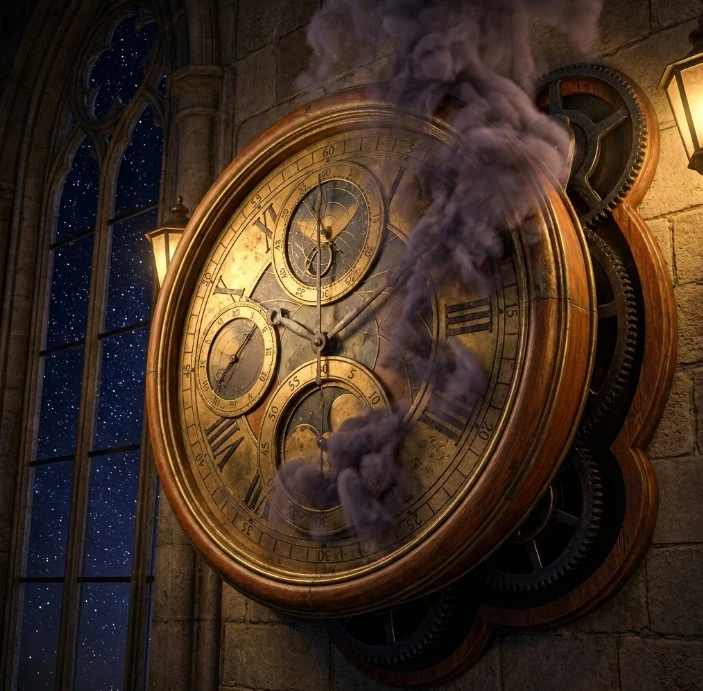
To understand Rahu Kaal, you first need to understand Rahu. In Vedic astrology, Rahu is not a physical planet. It is the North Node of the Moon, one of two shadow points where the Moon's orbit crosses the path of the Sun. In ancient Hindu mythology, Rahu is depicted as a severed demon head. It is linked to illusions, obsessions, sudden changes, and disruptions of the natural order.
Rahu is associated with things that seem attractive but can lead you astray. It governs foreign influence, technology, mass media, unconventional thinking, and the unknown. It is not a malevolent force exactly. It is more like a wild card. And ancient Vedic scholars, who were remarkably precise astronomers, observed that certain time windows associated with Rahu's energy tended to produce unpredictable outcomes for new beginnings.
Kaal simply means time. Rahu Kaal is Rahu's time. The period of the day associated with Rahu's energy, where that wild card energy is amplified. The wisdom of Panchang recommends not beginning new or auspicious activities during this window, not because Rahu will curse you, but because the energy of the moment is not aligned with stable, predictable beginnings.
How Is Rahu Kaal Calculated Each Day?
Here is something that surprises many people. Rahu Kaal does not happen at a fixed time. It is different every day and in every city because it is calculated relative to local sunrise and sunset. This is what makes a real-time Panchang calculator so valuable over a printed almanac.
The calculation works like this. Take the total daylight hours for your location on a given day (from sunrise to sunset). Divide those hours into eight equal segments. One of those eight segments is designated Rahu Kaal for that day of the week. The weekday assignment is fixed: Monday gets the 2nd segment, Saturday the 3rd, Friday the 4th, Wednesday the 5th, Thursday the 6th, Tuesday the 7th, and Sunday the 8th.
Think about it this way. If sunrise in Sydney is at 7:00am and sunset is at 5:30pm, that is 10.5 hours of daylight. Divided by 8 gives a segment length of about 78 minutes. For a Monday, Rahu Kaal would be the 2nd segment: from around 8:18am to 9:36am. But in London in winter, sunrise is much later and the day is shorter, so the exact times shift significantly.
This local variation is exactly why diaspora communities around the world find tools like our free Vedic Panchang calculator so useful. You cannot just use an India-based timetable when you are in Melbourne or Toronto. The timings will be wrong by hours.
What Should You Avoid (and Not Avoid) During Rahu Kaal?
The traditional guidance is clear and practical. Avoid beginning new activities during Rahu Kaal. The keywords are new and beginning. If you are in the middle of something you started earlier, carry on. Rahu Kaal only applies to initiations.
Things to avoid starting during Rahu Kaal: signing new contracts or legal agreements, starting a new job or business, beginning a long journey, launching a project or product, beginning medical procedures, performing auspicious ceremonies (weddings, housewarming, naming ceremonies), and making major financial investments.
Things that are completely fine during Rahu Kaal: routine work and ongoing projects, rest and relaxation, meditation and prayer for personal practice, exercise and physical activity, cooking meals, household chores, and anything that is a continuation rather than a beginning.
Carlos, who runs a small business in Toronto, checks the Panchang before scheduling client onboarding calls. He does not rearrange his entire life around it, but if he has flexibility in timing, he prefers to start new client relationships outside of Rahu Kaal. He says it is more about intentional timing than fear.
How Rahu Kaal Affects Daily Life for Diaspora Communities
Here is what most people get wrong. Many people in the diaspora think they need to use Indian Rahu Kaal timings, then convert to their local timezone. That is not how it works. Rahu Kaal must be calculated for the city where you actually are, based on local sunrise and sunset. Using Delhi timings in Sydney can be off by many hours.
Priya lives in Melbourne. Before her mother's bypass surgery, the family wanted to choose an auspicious window to begin the procedure. They checked the Panchang for Melbourne, found a Shubh Muhurat outside of both Rahu Kaal and Yamaganda Kalam, and scheduled accordingly. Whether you attribute any outcome to that timing or not, the practice gave the family a sense of agency and peace in a stressful period.
This is the deeper purpose of Vedic timing wisdom. It is not superstition. It is a ritualised way of pausing before important actions, being intentional about when you begin things, and aligning with natural cycles. That is a practice any culture can appreciate, whatever the underlying belief system.
Rahu Kaal and the Other Inauspicious Periods You Should Know
Rahu Kaal gets most of the attention, but the Panchang actually lists three similar daily inauspicious windows. Understanding all three gives you a more complete picture.
Yamaganda Kalam is associated with Yama, the lord of death. Like Rahu Kaal, it is a segment of the day considered unfavorable for new beginnings. It falls on different day segments than Rahu Kaal: Monday 4th, Saturday 2nd, Friday 7th, Wednesday 6th, Thursday 5th, Tuesday 3rd, Sunday 1st. If you want to be thorough in your Muhurat planning, avoid both Rahu Kaal and Yamaganda for major decisions.
Gulika Kaal (or Gulika Kalam) is associated with Saturn and is considered by some traditions to be even more inauspicious than Rahu Kaal for certain activities, particularly those involving new financial commitments. Our Panchang calculator shows all three timings side by side so you can choose the most clearly auspicious window available to you.
You might be skeptical, and that is completely fine. Even a secular interpretation is useful: these three windows account for about 4.5 hours of every day. Planning important initiations in the remaining 18+ waking hours teaches you to be intentional and not impulsive about major decisions.
Common Misconceptions About Rahu Kaal
The biggest misconception is that Rahu Kaal means bad things will definitely happen. It does not. Millions of people begin things during Rahu Kaal every day without drama. It is guidance, not a guarantee. Vedic astrology teaches probability and attunement, not fate.
Another misconception is that Rahu Kaal is the same time every day. As explained above, it varies by day of the week and by location. Sunday Rahu Kaal in Brisbane will be a completely different clock time than Monday Rahu Kaal in the same city, and both will differ from timings in New Delhi. Always use a location-specific tool.
Some people think avoiding Rahu Kaal means being passive or fearful. The opposite is true. Checking the Panchang is an active practice of choosing your timing consciously. It is the same logic as checking the weather before a major outdoor event. You are not afraid of rain. You are planning intelligently.
Related Articles
Frequently Asked Questions About Rahu Kaal
Final Thoughts
Rahu Kaal is one of those ancient ideas that sounds mysterious until you understand its practical logic. It is about timing your important beginnings with intention and care, not about fear. Whether you follow the guidance strictly or simply use it as a prompt to pause before major decisions, the practice of consulting the Panchang connects you to a 5,000-year-old tradition of astronomical wisdom. Check today's Rahu Kaal for your exact city with our free Vedic Panchang calculator and make your important decisions with confidence.
Check Rahu Kaal Today →